Health Connect – November Edition

Health Connect – November Edition 

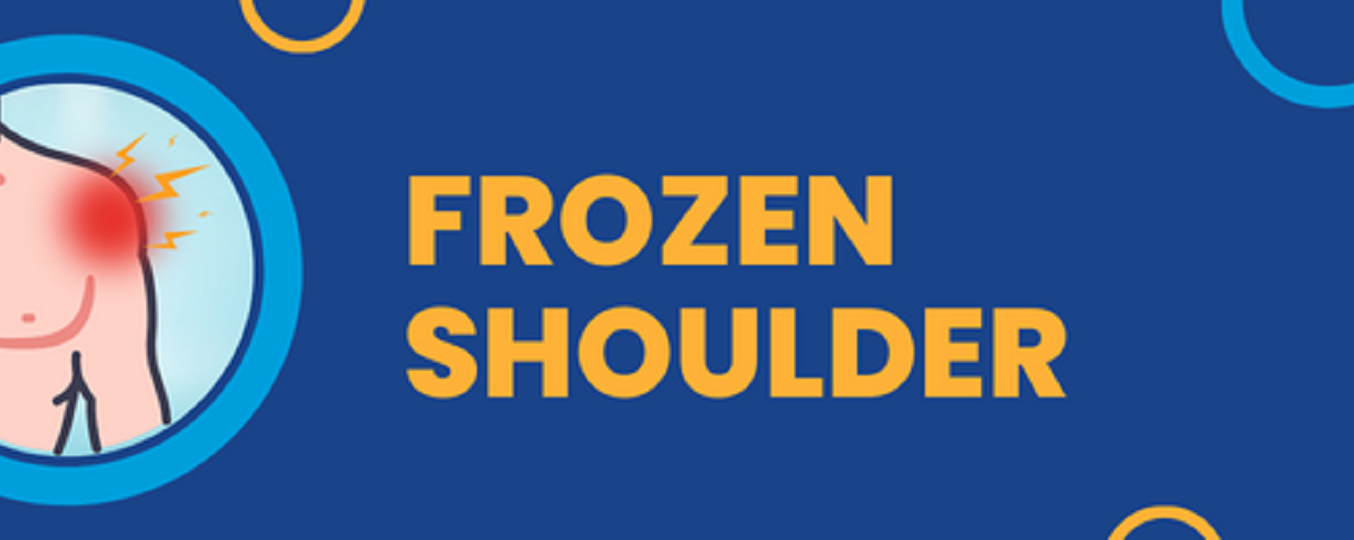
Frozen shoulder is a common cause of shoulder pain in the community and is characterized by shoulder pain, joint stiffness and restricted range of motion. It can last from weeks to months.

Frozen shoulder can be broadly classified into primary or secondary. In primary frozen shoulder, there is no known cause but is commonly associated with other medical issues such as diabetes, thyroid disease and more. In secondary frozen shoulder, there is usually a history of prior shoulder injuries such as bone or tendon injuries.

The diagnosis of frozen shoulder is primarily a clinical one, based on the clinical history and physical examination. Nonetheless, imaging is routinely performed in patients who present with shoulder pain to assess for other conditions that can cause shoulder pain.

The management of frozen shoulder is dependent on several factors including severity of symptoms, patient’s characteristics, goals etc. Common non-surgical management techniques include physiotherapy and medications. Surgical intervention is also done for some. Do speak to your healthcare provider for further information regarding this.

Disclaimer: All content in this publication is for informational and educational purposes only. It does not constitute any form of medical advice or clinical care nor is it intended to be a substitute for professional medical care. Please speak to your healthcare provider if you have any questions pertaining to your healthcare.

7 Strategies to Overcome Conflict

What is Conflict Resolution & Why is it Important?


We are bound to face conflicts. For that reason, the need for conflict resolution, whether it is at home or at the workplace, is critical. Conflict resolution is vital regardless when and where it is utilized because it allows us to stay consistent with our relationships. Conflict resolution enhances commitment and brings new insights among opposing perspectives from the people around us.

Conflict resolution is used to settle disputes and disagreements. It facilitates a conversation that reaches the goal of emotional understanding among everyone. The essential characteristics that an individual should have during conflict resolution are good communication and emotional intelligence. However, the ability to resolve conflict is just as important as recognizing when needed.

What are the signs that we need to resolve the situation?
Remember that we are all different. Therefore how we show distress during conflicts may be different. Below are some common and earliest signs that conflict resolution might need to be utilized.

In the workplace it can be shown as:
– Disengaged or dysfunctional meetings
– Slowdown in productivity
– Poor performance level
– High employee turnover
– Avoidant body language
– Clique formation
– Repetitive disagreement

In the home, with family and friends, it can be shown as:
– Passive aggressiveness
– The issue frequently occurring
– Tense conversations
– Inability to share true feelings
– Avoidant body language

Regardless of how somebody might portray their disagreement or distress, the over-arching sign that we need to recognize is their demeanour. Essentially, if people act unusual compared to their normal behaviour, we may need to step in and ask what is wrong. Sometimes we get the “gut feeling,” where we sense something is “off” and out of the ordinary. In those instances, trust your instinct. If you feel like someone is avoiding you or a particular topic, chances are, you are right.

To help with conflict resolution, below are seven strategies that you can consider to help resolve a conflict at home or at work:

1. Address the problem in a private place.
Always make sure that you and the person or people you are discussing with are in a safe place, where only the people involved are present. There is no need to make a public scene about the problems you and the other party are facing. If you are resolving conflict at home, make sure you go to a private room, away from the rest of your family members. You can pull your co-worker aside or hold a team meeting if the conflict involves a big group. Doing this lets the other people know that you respect them and their right to privacy. It also makes everyone more comfortable to open up to each other when everyone involved can be addressed in the same room.

2. Be clear about the issue.
Do not let yourself or anybody get caught off guard by their emotions. Remember to remain calm and adequately get your message across. Constantly check up on everyone to know if they understand what you are saying and allow them to share their thoughts on the problem. This is not a time to be passive-aggressive and give sarcastic remarks. This is the time where everyone has an equal opportunity to share what it is that is truly bothering them. Make sure to keep the conversations respectful and in a calm manner.

3. Negotiate & compromise.
Bring everyone to an agreed solution. Whether you are at home or work, do not pick sides. Talk to all parties and come to a harmonious conclusion on how to mitigate the problems. If you could apply the above strategy, this step should occur naturally.

4. Avoid overconfidence and intimidation.
Do not let your ego get in the way. Everyone should actively listen and empathize with the opposing side during conflict resolution. There should not be a “he said, she said” or “I’m right, you’re wrong” battle going on. Everyone’s mind should remain open to receiving feedback. Always remember that nobody should be blamed. Choosing someone to blame adds fuel to the fire, resulting in havoc. Converse with everyone openly and without bias.

5. Be honest about your shortcomings.
In addition to not letting your ego get in the way, practice apologizing for any of your shortcomings in the situation or incident. Chances are, you could have played a part in the conflict. And when they say you have, do not try to argue your way out – simply say sorry and move on.

6. Actively listen to all parties.
Active listening is the crucial factor to ensuring conflicts get resolved. Be sure to acknowledge what the other person has to say and offer your empathy towards them. Do not condemn them for their mistakes, and do not continue to think of them in a bad light. We can all change over time. We can all get rid of the bad traits we carry, whether at home or in the workplace. The essence of conflict resolution is reaching harmony with everyone involved.

7. Have clear intentions for strategies in the future.
Once you have discussed and shared your thoughts, make sure to reach a conclusive resolution and strategies to prevent the same conflict from occurring again. This would be an excellent time to set boundaries with the people involved and remind everyone what their role is. If you are resolving conflict at home, make sure to show affection in your intentions. And if you are at work, make sure to show respect in your intentions.

Conflict resolution is essential in building stronger relationships with the people around us. It is the foundation of trust and respect and can ultimately improve everyone’s communication skills. The key to conflict resolution is recognizing when it is needed and knowing the strategies to guide you through it. Remember to keep your communication respectful and show empathy when listening to others.

Understanding Depression: You are Not Alone

Understanding Depression: You are Not Alone

Depression is an illness that can negatively distort how we think, feel, and act. The intense feeling of low mood, attributed with depression, can lead to decreased functions in daily living, including relationships, work, education, and self-help. The difference between depression, sadness, and grief depends on the symptoms involved. 

According to the DSM-5 (American Psychiatric Association created the Diagnostic and Statistical Manual of Mental Disorders), an individual must have five of the following symptoms that caused a decreased level of functioning. Furthermore, they stated that the symptoms should have been present for at least two weeks or more. These symptoms are:
– Depressed mood most of the day, nearly every day, as indicated by the individual or others
– Fatigue or loss of energy most of the day, nearly every day
– Diminished interest in most or all activities that the individual would have normally enjoyed
– Significant weight loss or gain (5% of more than body weight), without changing diet
– Difficulty falling and staying asleep or sleeping for most of the day
– Observable agitation, restlessness, slowed motor movements
– Feelings of excessive worthlessness or guilt
– Diminished thinking, concentrating, or deciding ability
– Thoughts of death and/or suicide and having suicidal plans

The DSM-5 has different categories under depressive disorders, ranging from disruptive mood dysregulation disorder to unspecified depressive disorder. By knowing the different ranges of criteria and symptoms in each condition, we can understand the complexity of depression.

How to Overcome Depression
The most important message that anyone experiencing mental illness should always hear is: you are not alone. Initially, it can be challenging to open up to others and ask for help. The idea that people will judge you or misunderstand you can be daunting. Nevertheless, it should not stop you from getting the proper support you deserve. Regardless of who you open up to, always make sure that they are a supportive, trustworthy, and respectful individual.

If you are not ready to talk to people face-to-face or don’t have a support system, there are online chats or phone numbers that provide anonymous and confidential support. For example, Samaritans of Singapore (1800-221-4444) and the Mental Health Helpline (6389-2222). Both national hotlines provide free 24-hour support services on depression or other mental health illnesses.

Seeking support should also include receiving proper medical advice. If you have been experiencing the symptoms of depression listed above, you should always seek medical attention to disclose the illness fully. By going to a doctor, they can educate you about depression and provide resources to help your recovery.

Often, doctors will recommend a combination of therapy and medications, depending on the severity of your depression. However, it is essential to note that medications can only influence your mood to an extent. Medications alone will not solve depression. It is still crucial to have the
discipline to apply behavioural and cognitive changes. Some life-changing habits that can be used every day are:
– Limiting time on social media
– Getting 7-9 hours of sleep
– Exercising regularly
– Eating nutritious foods and staying hydrated
– Talking to and spending time with loved ones and pets
– Picking up or starting a hobby
– Spending some time in the sunlight
– Meditation or praying
– Healthy distraction techniques

Spending time by ourselves and getting in tune with our minds can allow us to understand how to take care of ourselves properly. People nowadays may find it difficult to adequately provide self-care regimens because of school and work, family obligations, or social media. Regardless of how busy our schedules can get, we should never neglect our mental health.

With the increasing number of individuals diagnosed with depression, we finally accept that depression is a real illness. Like many illnesses, treatment and help are readily available. And like many illnesses, recovery from depression is possible.

Remember, people are willing to listen. Reach out. Speak up. You do not deserve to face depression alone.

Source: MHC Asia Group ©

 Managing Workplace Stress in Challenging Times

Managing Workplace Stress in Challenging Times

Stress occurs when our bodies feel an unfamiliar external stimulus, causing the feeling of threat. There are two types of stress: healthy and unhealthy. Hans Selye, an endocrinologist, developed the general adaptation syndrome, where he theorized that humans undergo three stages of stress. The three stages are:

  1. Alarm – is essentially where our bodies experience the initial fight or flight symptoms.
  1. Resistance – is where our body produces a high metabolic rate. We may start to feel irritability, frustration, and poor concentration. In response to the increased activity, our body will attempt to recover and repair itself until it reaches its normal limits or starting point.
  1. Exhaustion – when our body can’t return to normal, it will experience prolonged stress and can end up draining our bodies. This stage is where fatigue, burnout, depression, anxiety, and decreased tolerance occur.

Using the above concept of the general adaptation syndrome, we notice that healthy stress can be recognized as the ‘alarm’ stage. Healthy stress is beneficial because it can motivate us to continue with a task and work under pressure. On the contrary, unhealthy stress can be identified as the ‘exhaustion’ stage. This state is where the stress we feel does not bring productivity. Instead, it depletes us of our energy.

Understanding the importance of healthy and unhealthy stress is highly crucial in our day-to-day lives. Due to the pandemic changes in our lives, we have increased workplace stress. Reasons that many people have been experiencing workplace stress could range from fear of being laid off from work to poor time management due to working from home.

Our society has also romanticized the notion of “hustling” or “grinding” – the idea of working hard to attain success. While this determination and grit are beneficial, these can pressure one to do work constantly. This can be dangerous because we risk overwhelming our minds and thus adding on unnecessary stress. The common warning signs of workplace stress can include:

– Anxiety, irritability, depression

– Burnout, fatigue, apathy

– Difficulty sleeping, eating, concentrating, and engaging with others

– Body and muscle aches

– Using substances or drugs to cope

– Decreased libido

Coping With Workplace Stress

Remember that unhealthy stress occurs when our body is overworked and drained. Sometimes we can get so wrapped up in our work tasks and responsibilities that we forget to check on ourselves. We need to start making it a habit to take breaks at work. Allow this time to step away from what you are doing, take a deep breath, and think clearly about your next steps.

Some ways we can decrease workplace stress are to:

  1. Have open conversations with our co-workers, managers, and supervisors. We must not shy away from turning to each other for support. Keep in mind that a healthy workforce cannot function with unhealthy employees, so start on building a support system at the very place that is known to cause stress.
  1. Stop over-scheduling yourself. Often, we can get motivated to win promotions in work by saying yes to every task and agreeing to every responsibility. This can lead to the dangerous act of overwhelming ourselves. Don’t be afraid to accept new challenges but do them at your own pace.
  1. Develop healthy lifestyle choices Various scientific research has proven the benefits of adequate sleep, nutritious foods, and regular exercise. Using these three components in our daily lives will immediately result in our bodies starting to feel refreshed, energized, and more robust. In turn, it will help alleviate the stress that we are experiencing.
  1. Take a break to recharge and relax Remember that unhealthy stress results from over-exhaustion. To avoid this, we must take the time away to recharge our energy and balance our thoughts and emotions.
  1. Have good time management. When work piles up in our schedule, it can be easy to drown in deadlines. We can all achieve time management by having the discipline to delegate our tasks a little bit each day to avoid overworking ourselves.

Stress can be daunting even for the most organized individual. When mishandled, it can cause a state of distress. With the alarming events that our world is experiencing, it is becoming increasingly challenging to manage our time and find time for self-care. But the silver lining is that we are not alone, and there are many resources available for us, such as those listed on  https://www.gov.sg/article/call-these-helplines-if-you-need-emotional-or-psychological-support

Health Connect – October Edition

Health Connect – October Edition 

Cataracts refer to the opacification / clouding of the lenses in one’s eyes, thereby causing a multitude of visual problems.

The majority of cataracts are age-related, and the incidence of cataracts usually increases with age due to degeneration. However, cataracts can also occur due to prior insults such as ocular trauma, infections, inflammation, radiation, medication side-effects, comorbidities etc.

The symptoms of cataracts may vary widely and include blurring and distortion of vision, blindness, difficulties with night driving, glare issues and more. It is routinely diagnosed via eye examinations (e.g. fundoscopy, slit-lamp examination) by a healthcare provider.

The management of cataracts is dependent on several factors including one’s age, maturity of cataracts, comorbidities and more. Surgical intervention, whereby new lenses are inserted, is the mainstay of treatment. Do speak to your healthcare provider for further information regarding this.

References
1. https://www.uptodate.com/contents/cataract-in-adults
2. https://www.nuh.com.sg/About-NUH/Clinical-Outcomes/Pages/Cataract.aspx#:~:text=In%20Singapore%2C%20the%20percentage%20of,people%2075%20years%20and%20older.

Methods to Help You Stop Worrying

Methods to Help You Stop Worrying

Sometimes life can be stressful, causing many people to experience worrying or anxious thoughts. It is a natural reaction that may be caused by mounting bills, a first date or beginning a new job. While worrying may be normal in those situations, it may become a cause for concern when it is persistent or uncontrollable.
It is important to identify when you are worrying too much as it can take a negative toll on your mental and physical health. Constant worrying can leave you feeling restless, cause headaches, muscle tension, or make it difficult to concentrate. When worrying or anxious thoughts start to interfere with your daily life, it is time to address the issue and employ methods to help you to stop worrying!

Method 1: Dedicate a daily time for worrying
When anxiety and worry are constant throughout the day, those thoughts may become a distraction which make it tough to be productive. Instead of worrying all day long, dedicate a set time every day for worrying. Create a ‘worry period’ where you sit at the same place at the same time each day and allow yourself to think about whatever’s on your mind. Write down your thoughts and then continue about the rest of your day. Dedicating a set time and writing down your worries will help ensure the rest of the day is enjoyable and a worry-free zone.

Method 2: Address your worries
People who suffer from chronic anxiety may overestimate situations and immediately jump to worst-case scenarios. In most cases, these situations are not as troubling as they may appear. It is important to challenge these thoughts and address your worries in order to reduce your stress and anxiety about the particular situation.
During your dedicated ‘worry period’, ask yourself several questions:
– Can I look at this situation in a more positive, realistic way?
– What evidence is there that my thoughts are true?
– Will worrying help me overcome the situation or is it just hurting?
– What advice would I give a friend or family member who had this worry?

Method 3: Categorize your worries
Distinguishing between solvable and unsolvable worries will help you address your problems head-on. Categorize your worries into solvable worries that you can address right away (for example if you are worried about paying a bill) and unsolvable worries in which there is no solution to the problem (for example thinking what if I get into an accident someday?).
If your worry is solvable, make a list of all the possible solutions to the problem. After selecting the best solution, make a plan of how you can start actually doing something about the problem. Making a plan to solve the problem will help you feel less anxious.
If you worry is unsolvable, try to come to terms with the uncertainty. There is no use spending your time thinking about all the things that could go wrong. Try to accept the uncertainty of life and enjoy all the good things you have in the present moment.

Method 4: Give yourself a break
It is important to take some time out for yourself and give yourself a break from relentless worrying. This is especially important if you worry excessively and feel like negative thoughts are taking over your life. There are a few easy steps you can take to give yourself a break:
– Get some exercise—exercise is an effective and natural way to release endorphins and relieve stress and anxiety.
– Mediate—yoga or meditation are great mindfulness exercises that can help you interrupt an endless loop of negative thoughts.
– Try deep breathing—breathing exercises can help calm your mind and quieten negative thoughts.

Method 5: Talk to someone
It is incredibly useful to voice your worries to a trusted friend or family member. It is important that the person you are talking to will listen without any judgment or criticism. Talking about your worries with someone face to face can help calm your anxiety, put things into perspective and make the worry seem much less serious.

Method 6: Be mindful
By practicing mindfulness, you can focus on the present instead of worrying about what might happen in the future. Being mindful of your thoughts and emotions will allow you to stay present and realize that worrying about things out of your control is causing you to be stuck. Let go of your worries by staying in the present moment and break free of the negative worry cycle.

It isn’t healthy to spend your time worrying, there are many methods you try to help make you feel less anxious. Dedicate a daily time for worrying to categorize and address your problems. This will allow you to break down your concerns and better tackle your worries. Don’t forget to give yourself a break, talk to someone you trust and practice mindfulness. By using these techniques, you will be better equipped to get through stressful times and enjoy life instead of spending your time worrying.

Source: MHC Asia Group ©

Health Connect – September Edition

Health Connect – September Edition

To kickstart our new monthly series, we will start off with a topic that has been widely reported in the media recently – monkeypox

Background

Monkeypox is a viral disease caused by the Monkeypox virus, an orthopoxvirus. There are 2 distinct types of the monkeypox virus – West African and Central African. The monkeypox virus from Western Africa is thought to be less virulent. While monkeypox is not a pathogen that we are familiar with in this part of the world that we live in, it has in fact been known to cause disease in humans for many years in Africa and is even endemic in certain parts of Africa.

Transmission

Monkeypox cases, outside of Africa, have been traditionally linked to global travel, importing of animals etc. However, since earlier this year, the medical community has taken note of the fact that there are cases of monkeypox infections in various parts of the world, with some patients having no known travel history. At present, investigations are underway to better understand this.

Transmission of the virus can be broadly classified into animal-to-human or human-to-human transmission. Animal-to-human transmission occurs when an individual is exposed and in contact with an infected animal’s fluids or bites etc. Human-to-human transmission can occur through close contact and exposure to infectious materials and fluids, skin lesions and respiratory droplets etc.

Clinical Manifestations

Most of the time, monkeypox infections are self-limiting and symptoms are mild, though serious complications do occasionally occur. Common symptoms include rash, fever, chills, lymph node swellings, headaches, muscle aches, fatigue and more.

Treatment

Treatment of monkeypox infections are usually supportive and symptomatic in nature. Antiviral medications/vaccinations are currently being explored.

Do refer to the resources from the Ministry of Health (Singapore) and World Health Organization for further information and the latest updates.

References

  1. Ministry of Health, Singapore. (2022, June 7). Monkeypox. Ministry of Health. Retrieved June 14, 2022, from https://www.moh.gov.sg/diseases-updates/monkeypox
  2. Isaacs, S. N. (2022, June 10). Monkeypox. UpToDate. Retrieved June 14, 2022, from https://www.uptodate.com/contents/monkeypox?search=monkeypox&source=search_result&selectedTitle=1~17&usage_type=default&display_rank=1#H2690330960

Health Connect – August Edition

Health Connect – August Edition 

Polycystic ovarian syndrome or PCOS for short, is a common hormonal disorder in women of reproductive age. About 10% of women in this age group have this condition, and up to 70% of cases remain undiagnosed.

What are the signs and symptoms of PCOS?

  1. Irregular or absence of menstrual period
  2. Symptoms of high male hormones: excess hair growth on body, male-pattern hair loss, decreased breast size etc.
  3. Acne, oily skin
  4. Metabolic syndrome: weight gain and obesity, high blood pressure, diabetes and increased insulin level, high cholesterol
  5. Infertility/ subfertility
  6. Slightly enlarged ovaries or cysts in the ovaries

What is the cause of PCOS?

The exact cause is unknown, but it is likely to be a combination of genetic and environmental factors.

Some women with PCOS have several cysts in their ovaries. This is due to the eggs not being released every month, and the unreleased eggs in the ovaries form the cysts. Due to the irregular release of the eggs, menstrual periods are irregular, and women might experience difficulty with conception.

Women with PCOS may also produce more than normal levels of male hormones, which result in the features of excessive body hair, male-patterned hair loss etc.

How is PCOS diagnosed?

Your doctor will need to ask you about your medical history, and do a physical examination. Investigations like blood tests and ultrasound pelvis are required as well.

Why is it important to diagnose PCOS?

PCOS is associated with metabolic syndrome and endometrial cancer. Identification of PCOS will create the opportunity for your doctor to educate you on the long-term risks and monitor you accordingly.

Women with PCOS might also experience mood swings and depression, regular follow-up with a healthcare provider will improve pickup rates of such complications.

What is the treatment for PCOS?

There is no cure for PCOS. Treatment is targeted based on symptoms, and aim to reduce the effect of symptoms.

Lifestyle and dietary modifications
Regular exercise and weight management often help with regularization of menstrual periods.

Pharmacological management
Contraception pills might be used to regulate menstruation.
Subfertility or infertility can be managed with a specialist with either medication to induce ovulation, in vitro fertilization, or laparoscopic keyhole surgery
Metformin might sometimes be used to manage the insulin abnormalities associated with PCOS.

Health Connect – July Edition

Health Connect – July Edition

To kickstart our new monthly series, we will start off with a topic that has been widely reported in the media recently – monkeypox

Background

Monkeypox is a viral disease caused by the Monkeypox virus, an orthopoxvirus. There are 2 distinct types of the monkeypox virus – West African and Central African. The monkeypox virus from Western Africa is thought to be less virulent. While monkeypox is not a pathogen that we are familiar with in this part of the world that we live in, it has in fact been known to cause disease in humans for many years in Africa and is even endemic in certain parts of Africa.

Transmission

Monkeypox cases, outside of Africa, have been traditionally linked to global travel, importing of animals etc. However, since earlier this year, the medical community has taken note of the fact that there are cases of monkeypox infections in various parts of the world, with some patients having no known travel history. At present, investigations are underway to better understand this.

Transmission of the virus can be broadly classified into animal-to-human or human-to-human transmission. Animal-to-human transmission occurs when an individual is exposed and in contact with an infected animal’s fluids or bites etc. Human-to-human transmission can occur through close contact and exposure to infectious materials and fluids, skin lesions and respiratory droplets etc.

Clinical Manifestations

Most of the time, monkeypox infections are self-limiting and symptoms are mild, though serious complications do occasionally occur. Common symptoms include rash, fever, chills, lymph node swellings, headaches, muscle aches, fatigue and more.

Treatment

Treatment of monkeypox infections are usually supportive and symptomatic in nature. Antiviral medications/vaccinations are currently being explored.

Do refer to the resources from the Ministry of Health (Singapore) and World Health Organization for further information and the latest updates.

References

  1. Ministry of Health, Singapore. (2022, June 7). Monkeypox. Ministry of Health. Retrieved June 14, 2022, from https://www.moh.gov.sg/diseases-updates/monkeypox
  2. Isaacs, S. N. (2022, June 10). Monkeypox. UpToDate. Retrieved June 14, 2022, from https://www.uptodate.com/contents/monkeypox?search=monkeypox&source=search_result&selectedTitle=1~17&usage_type=default&display_rank=1#H2690330960

What Successful Companies Are Doing To Ensure Their Employees Stay Healthy

What Successful Companies Are Doing To Ensure Their Employees Stay Healthy

As the saying goes, “Health is Wealth” and this highlights the importance of our lifestyle choices that plays a critical role in our longevity. If you think it is expensive to stay healthy, try getting sick.

And if you think maintaining a balanced and healthy diet and exercising is expensive, think again.

What is the point if you can afford to go for a luxurious meal but yet unable to eat the food due to health conditions?

Hence, many successful companies such as Twitter are investing heavily into employee benefits, where they create a healthy culture of living benefits in the workplace.

One of the healthy initiatives that they have adopted is by taking care of employees’ health through targeted wellness programs. The benefits of a healthy workforce are immense and most importantly, employees will improve in both their work and life balance, thereby translating to increased productivity and higher job satisfaction as well.

Here at MHC, we help organisations optimise their employee benefits program by customising a flex wellness program that fits organisations of any size. Not only do we offer a diverse range of fitness bootcamps, health talks and onsite health screening for employees to choose from, we also create a healthy culture of living benefits with targeted wellness improvisations for your organisation!

An example of the professional services that we offer would be looking at the overall corporate health and dynamics of employees of an organisation before coming up with a customised program plan to achieve specific goals and ensuring that they are met.

Not convinced?

Corporate working life may disrupt the work-life balance of employees, especially the younger executives of age between 22 to 35. As a result, some of them would want to prioritise work and do extra night shifts just to climb the corporate ladder, ultimately leaving them with little or no time to exercise. Over time, they may burn out or even suffer from health complications due to lack of care.

In MHC, we believe in a healthy work-life balance and moderation is key.
By introducing targeted wellness programs for targeted employee age groups, it would remind them to take care of their health and stay healthy. If you want to help your employees manage their fitness and are at a loss of where to start, we have a one stop solution for you to cover all your corporate needs. We believe in the importance of staying active through healthy lifestyle choices and everyone (employers and employees) deserves better. Speak to a consultant today and discover the best tailored solutions for you and your company!

Authored by: MHC